Description
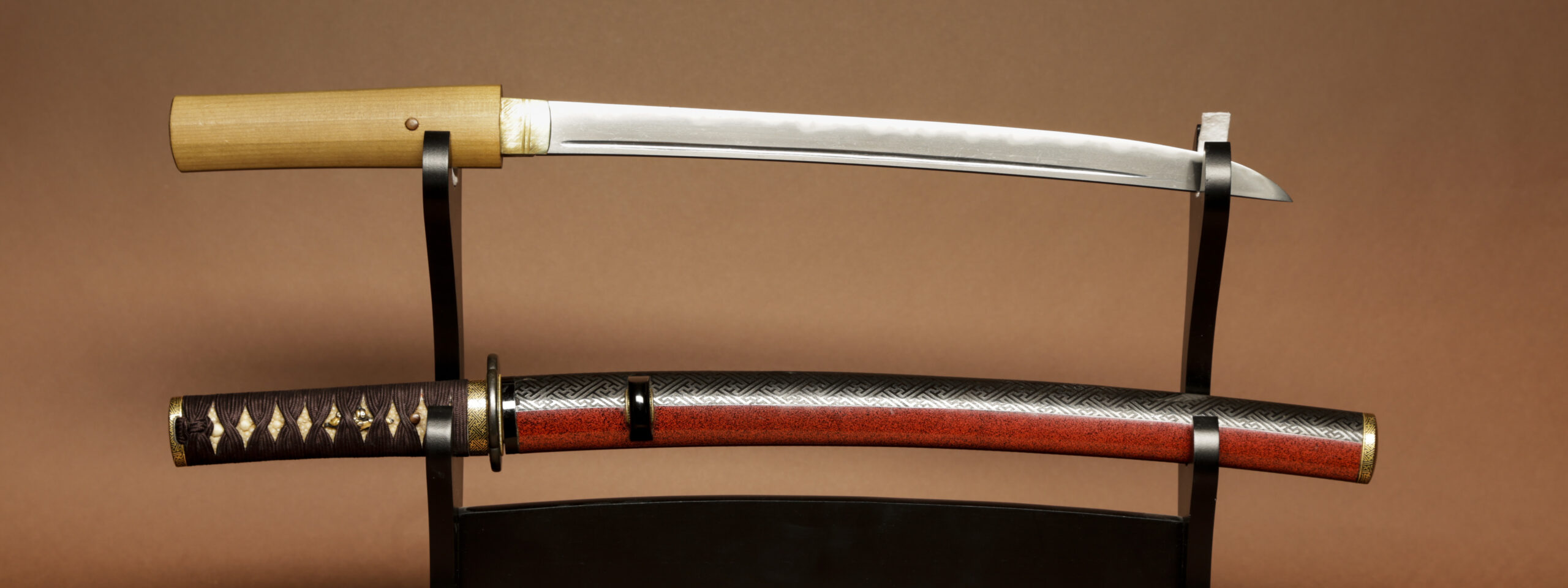
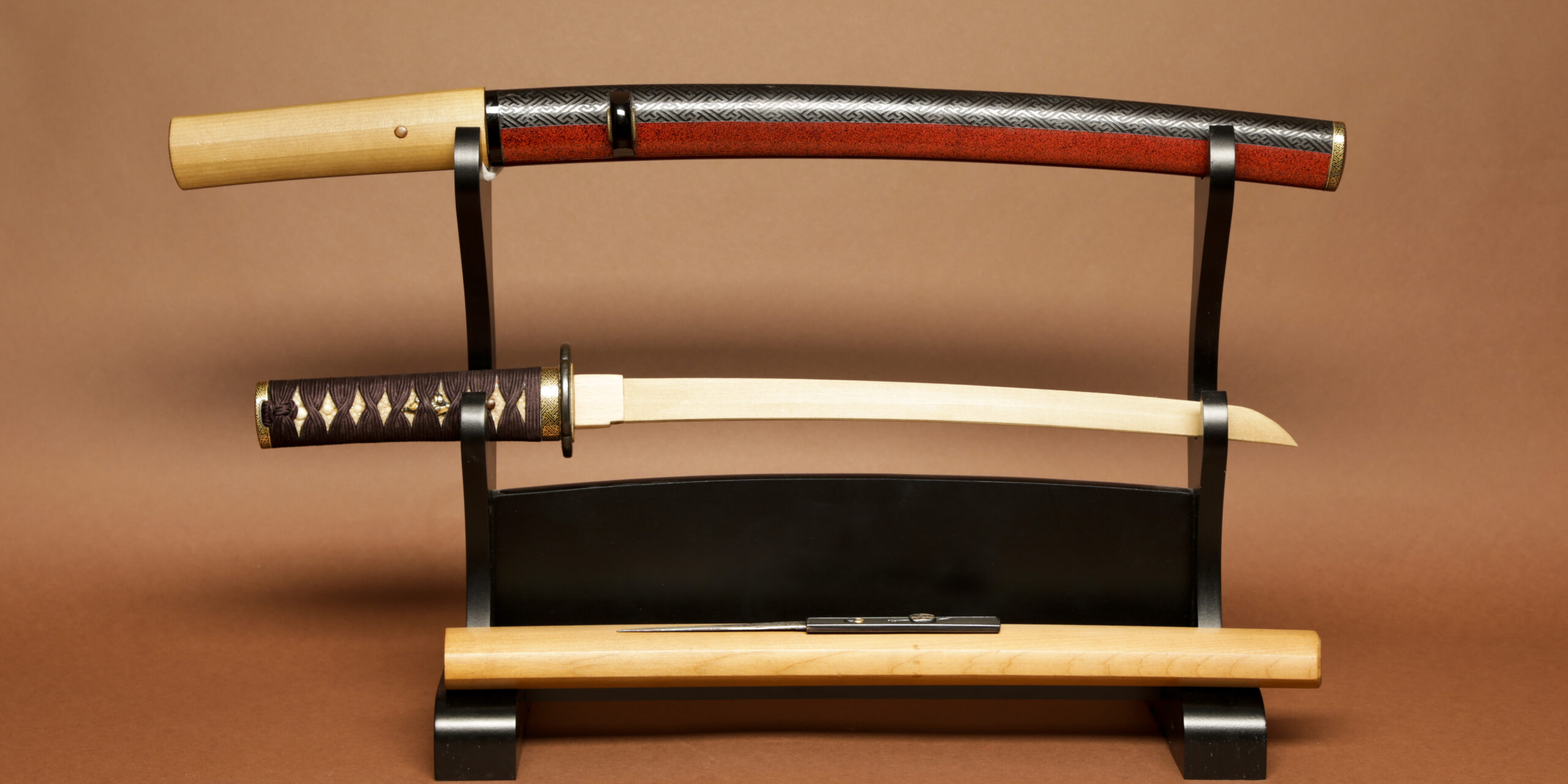
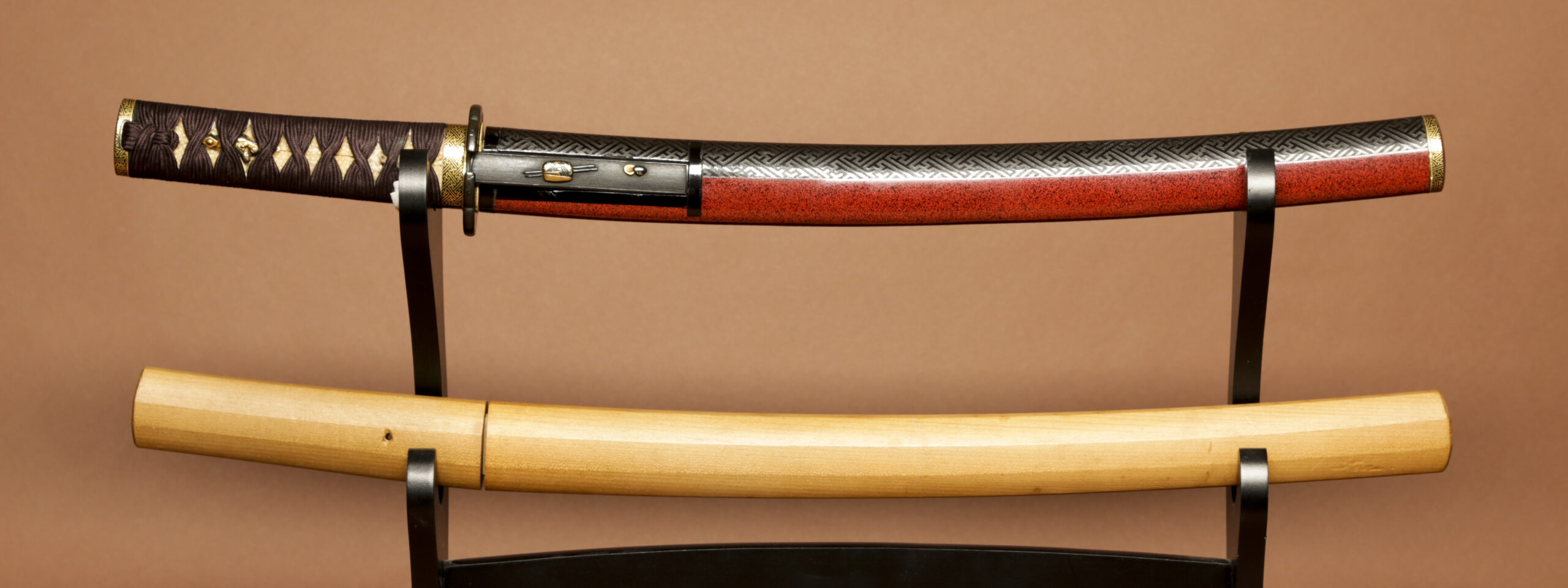
Wakizashi: In Shirasaya with Koshirae(NBTHK Hozon Token)
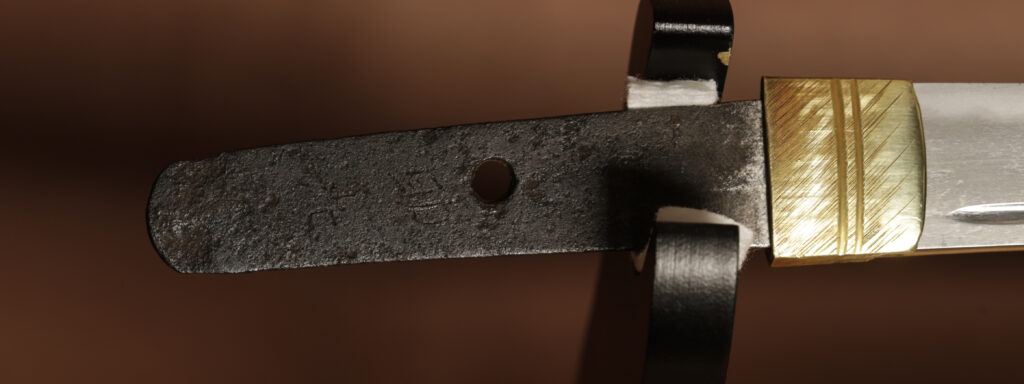
Signature: Sukemitsu (Bizen, Early Muromachi Period) 助光
This work is ranked as Jyojyo Saku among the works of Sukemitsu.
Habaki: Single-layered gold-covered habaki
Blade Specifications:
Blade Length: 36.4 cm (14.33 in)
Curvature: 0.6 cm (0.24 in)
Mekugi Hole: 1
Width at Base (Motohaba): 2.51 cm (0.99 in)
Thickness of Rim (Kasane): 0.46 cm (0.18 in)
Sword Weight: 200 g (7.05 oz)
Era: Early Muromachi Period (1400)
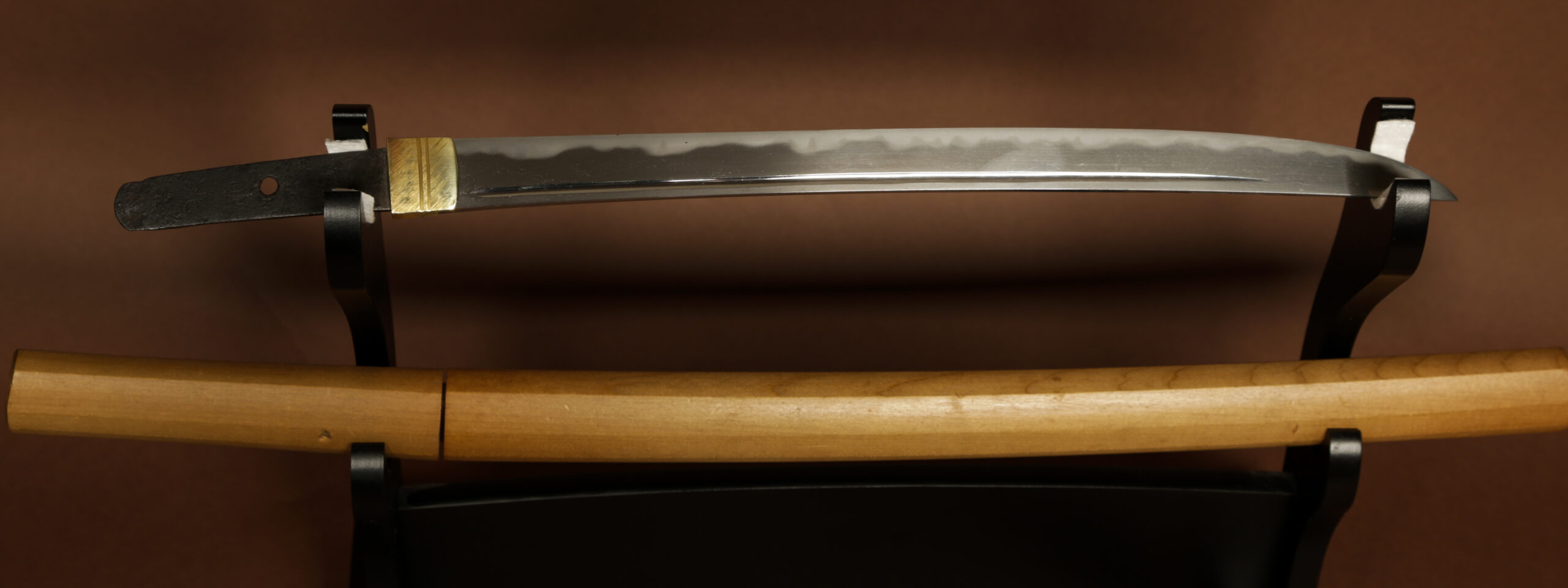
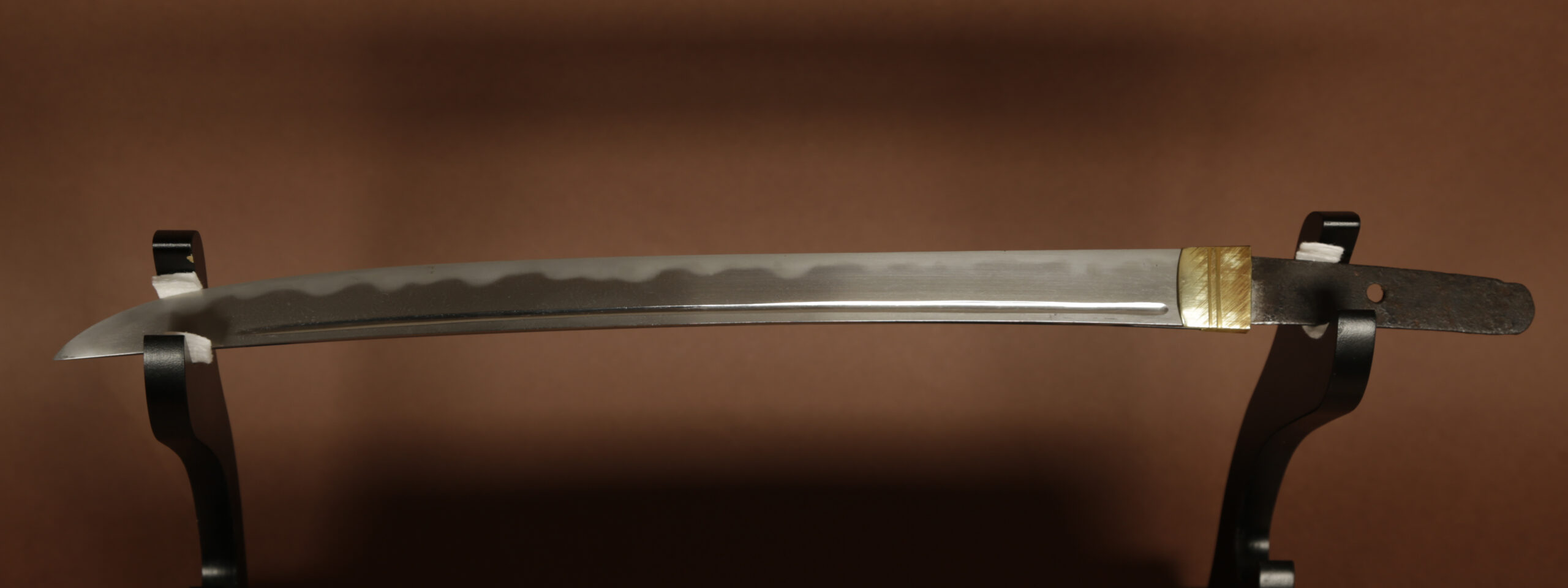
Shape:A slightly extended tanto with a forward curve and bo-hi (grooves) engraved on both sides.
Jigane (Forging Pattern):The fine ko-itame hada mixed with ko-mokume hada creates a well-forged surface, characteristic of Oei Bizen.
This refined jigane resembles the works of Morimitsu and Yasumitsu.
A distinct midare utsuri (shadowy reflection) appears.
Hamon (Temper Pattern):A nioi-based temper with gunome-midare mixed with choji-midare.
The boshi is in a ko-maru shape with a return.
Features:The first generation Sukemitsu was active around the Oei era of the Muromachi period and continued through Eikyo, Bunmei, Eisho, Tenmon, and Eitoku eras as a group of swordsmiths.
The style follows the characteristics of Oei Bizen, with a beautiful jigane similar to Morimitsu and Yasumitsu.
The jigane is almost identical to those masters, making it difficult to distinguish at first glance.
However, upon closer inspection, the utsuri lacks the bo-utsuri seen in Morimitsu’s works, and the boshi resembles a candle wick rather than a wave pattern, marking some differences.
This is an excellent work of Sukemitsu, attributed to the early Muromachi period around the Oei era.
Notably, the refined jigane with subtle utsuri and the hamon reflect the characteristics of early Muromachi swords.
Additionally, the koshirae is well-crafted and perfectly complements the blade.
Sukemitsu blades are relatively rare, making this a highly recommended piece.
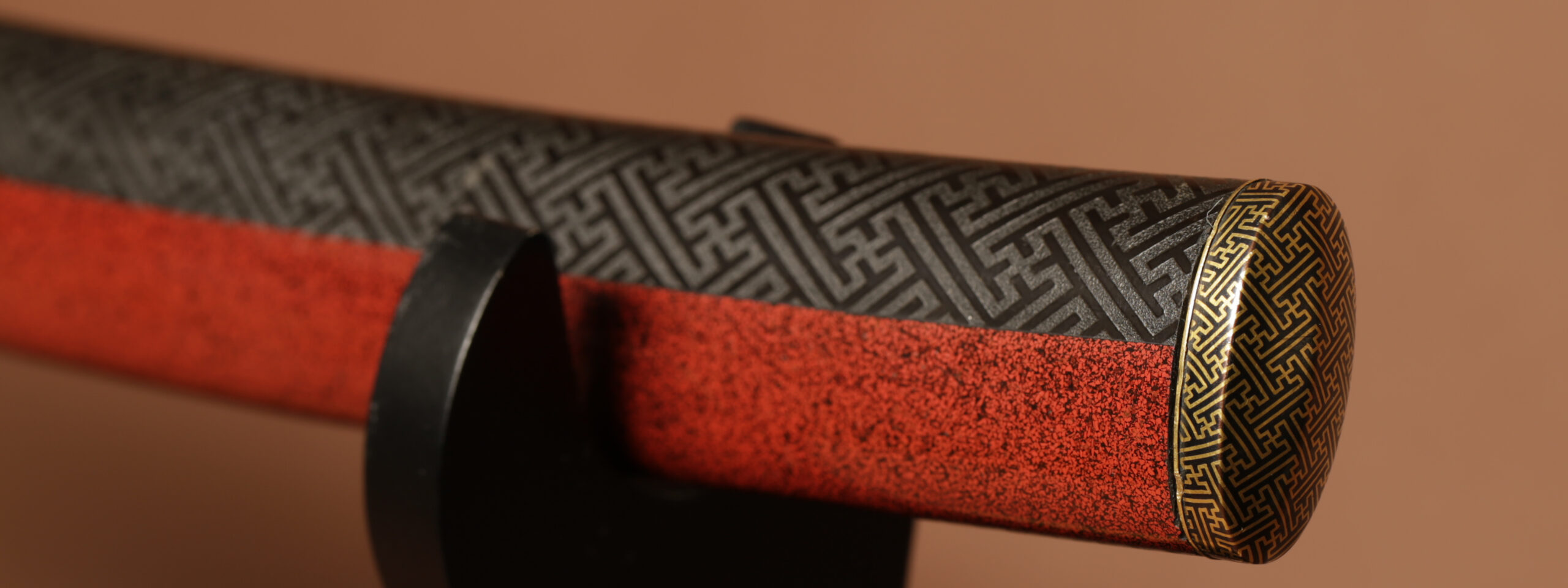
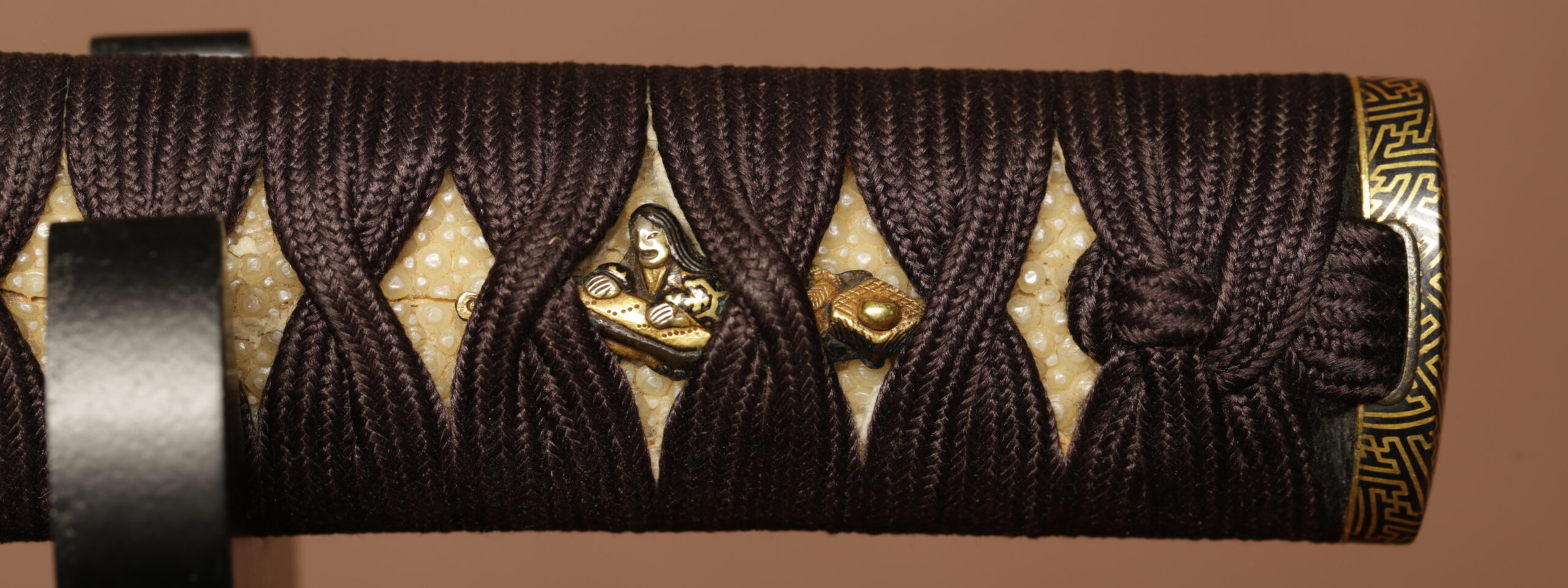
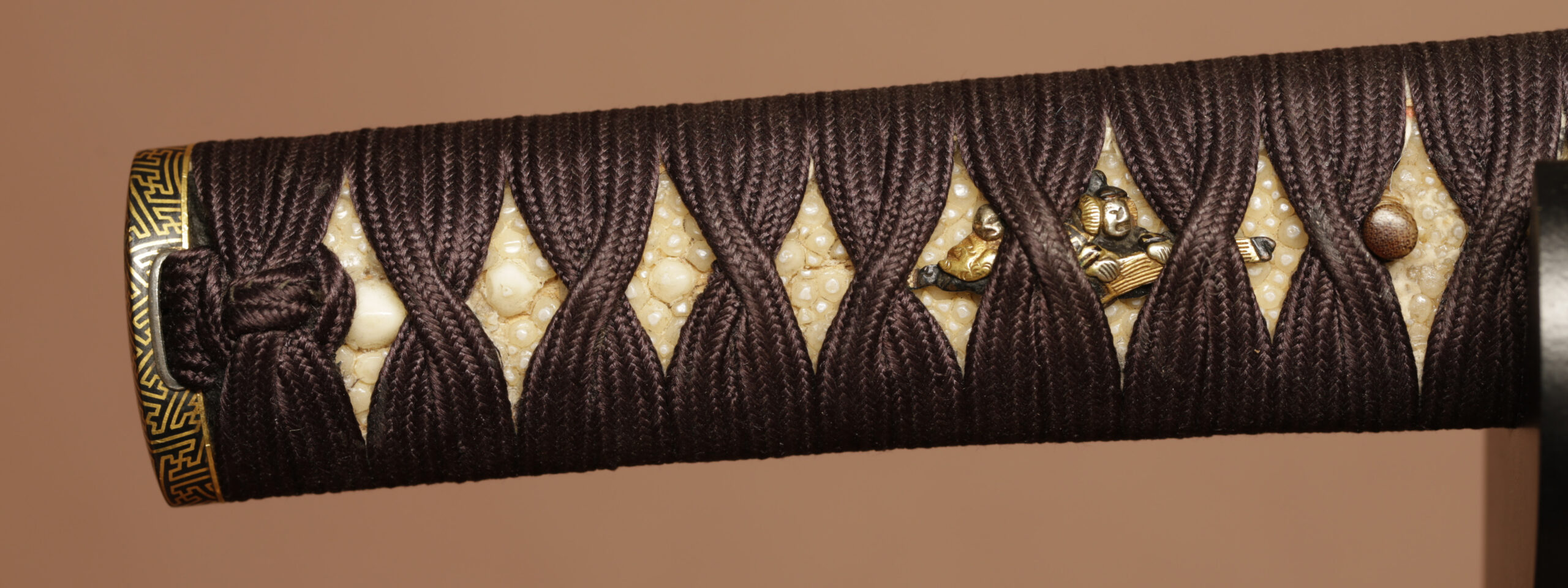
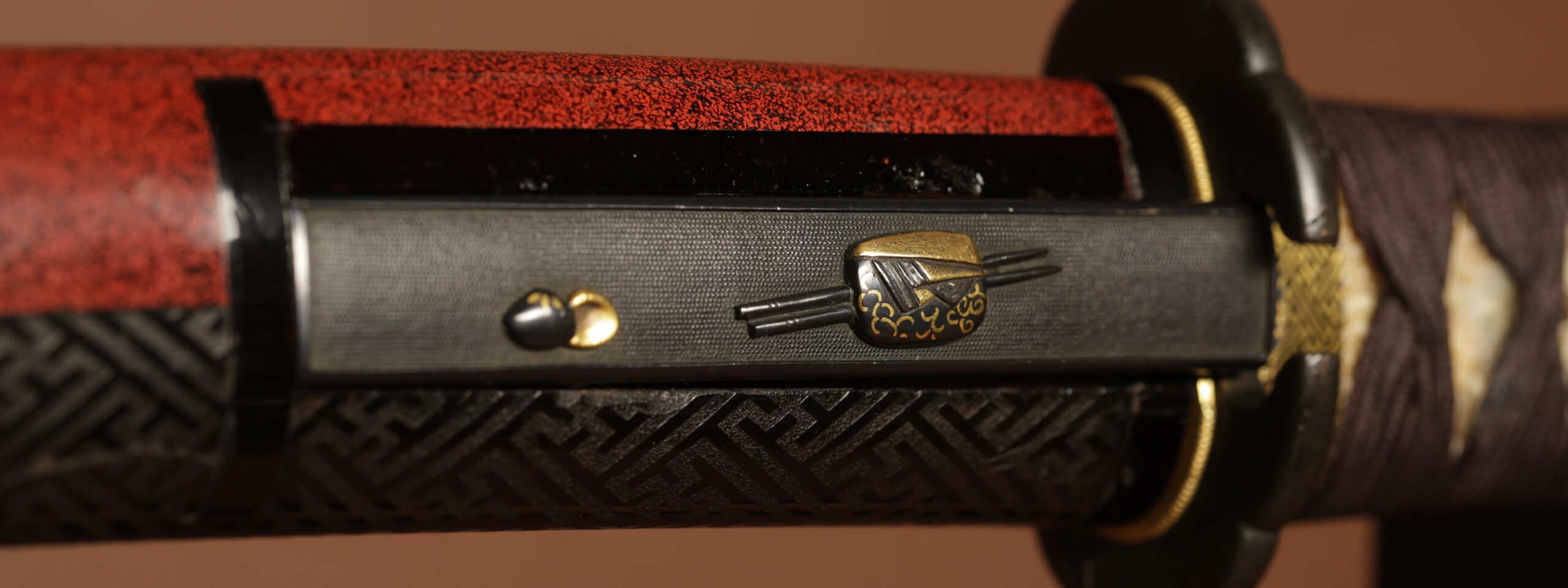
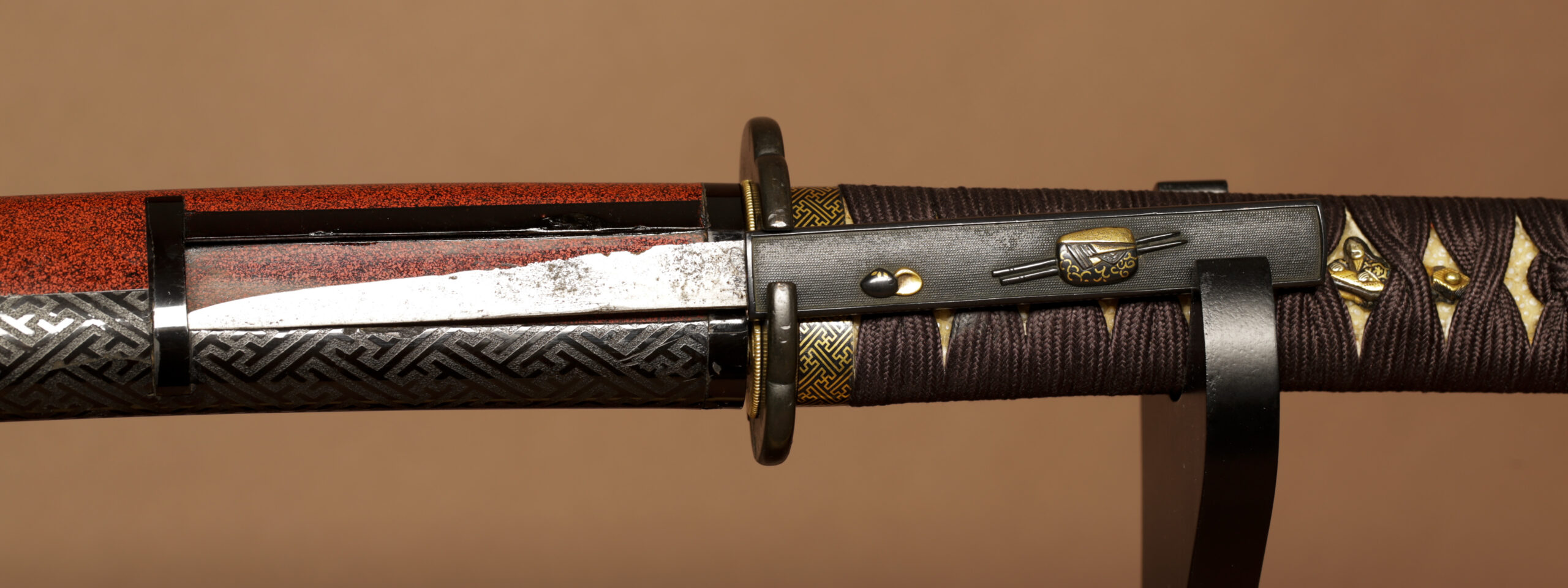
Koshirae (Mountings):
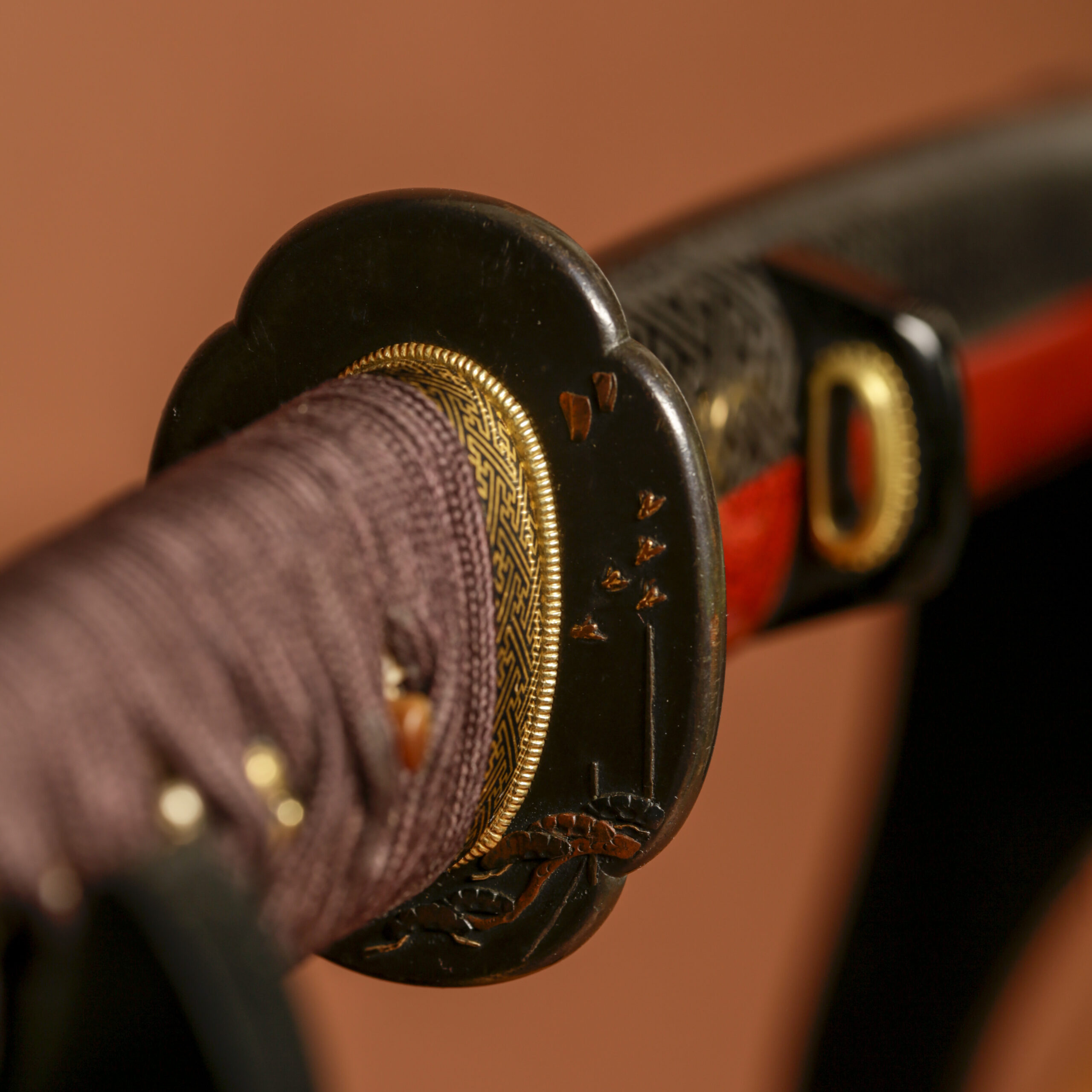
Tsuba: Mokko-gata shape with a slightly protruding rim, made of shakudo nanako-ji, featuring high-relief carvings of plants in suaka.
Kozuka: Shakudo nanako-ji, with high-relief carvings of what appears to be a clam and a bento box, decorated with gold and shakudo. The piece bears the signature „Goto Mitsutoshi(?)“.
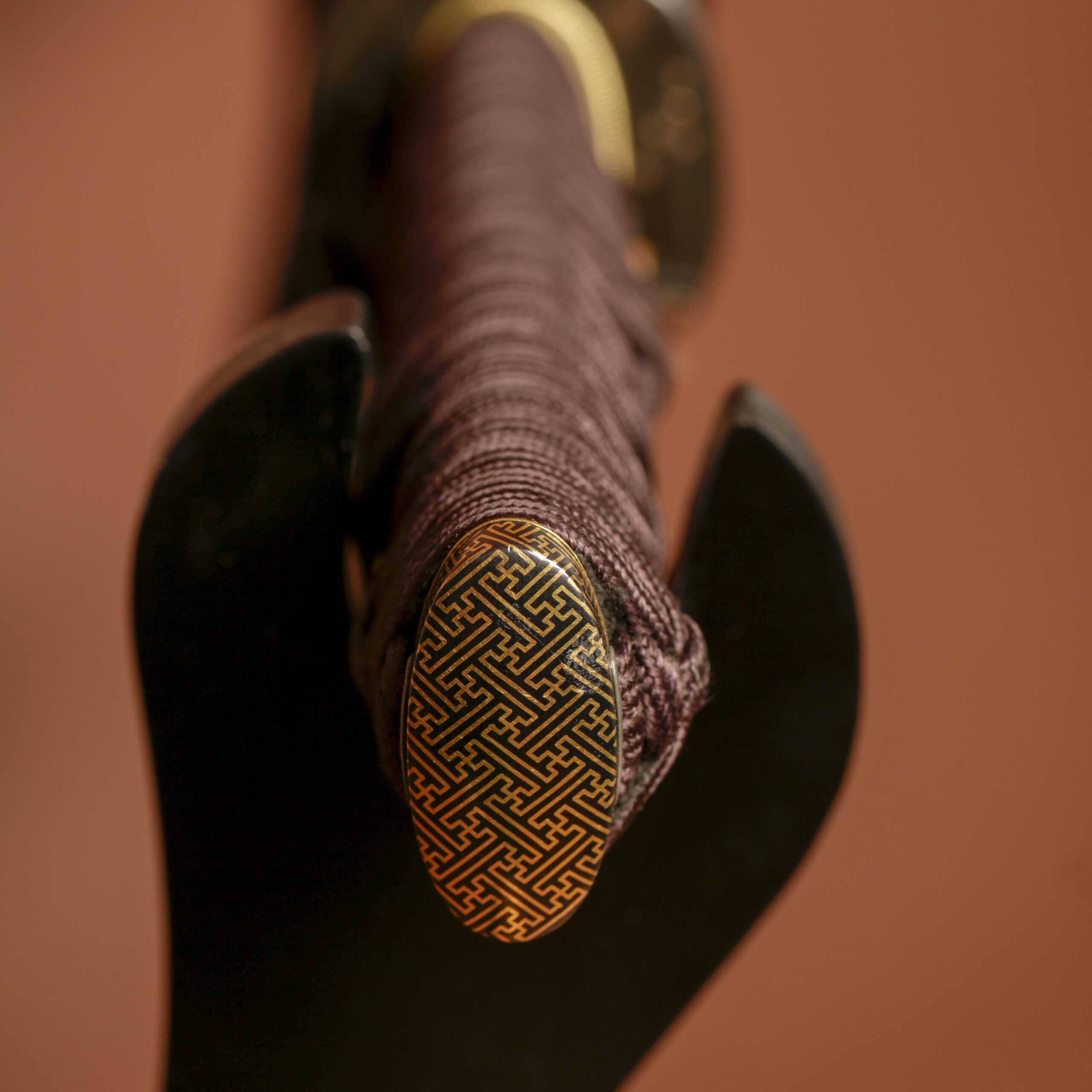
Fuchikashira & Kojiri: Shakudo base with gold inlay forming a decorative pattern.
Menuki: A figure playing a musical instrument, depicted with gold inlay.
July 1394 through April 1428
Ōei (応永) was a Japanese era name (年号, nengō, „year name“) after Meitoku and before Shōchō. This period spanned the years from July 1394 through April 1428. Reigning emperors were Go-Komatsu -tennō (後小松天皇,) and Shōkō -tennō (称光天皇).
Price:12490.- SFr